In today’s digital age, memory cards have become an integral part of our lives. They are used in a wide range of devices, from smartphones and digital cameras to gaming consoles and drones. These tiny, unassuming cards play a crucial role in storing and managing our digital memories. But have you ever wondered how memory cards work? In this blog post, we will delve into the different types of SD cards and look into the inner workings of memory cards and uncover the fascinating technology behind them.
History of SD Card
The history of the Secure Digital (SD) card dates back to the late 1990s when it was first introduced as a memory card standard. SD cards have since become one of the most widely used forms of flash memory storage in various electronic devices, such as digital cameras, smartphones, tablets, and more.
Here is a brief overview of the history of SD cards:
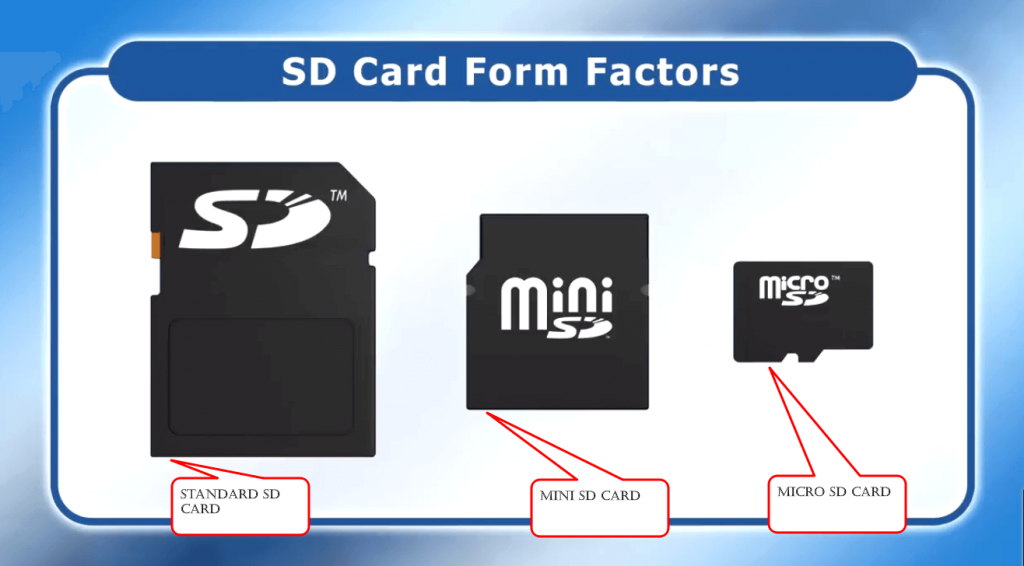
Twenty years ago, the first SD Card, now referred to as the standard size, was created. In 2003, the smaller Mini SD Card was introduced, and in 2005, the Micro SD Card was also developed.
Today, mini SD Cards are rare that most devices are using Standard SD Card or Micro SD Card, newer SD Card specifications are supporting Mini SD Card, i.e Most Newer devices are supporting either Standard or Mini SD Cards.
SD cards are now available with different types, capacity speed, classes and Bus interfaces.
Development and Introduction:
The SD card standard was developed by a consortium of companies, including Toshiba, Panasonic, and SanDisk. They introduced the SD card format in August 1999, with the goal of creating a small, secure, and versatile memory card for use in portable devices.
Physical Form Factors:
SD cards come in various physical sizes, with the original SD card being the largest. Over time, smaller form factors were introduced, including the miniSD and microSD cards. These smaller cards made it possible to incorporate SD card slots into smaller and thinner devices.
Capacity Growth:
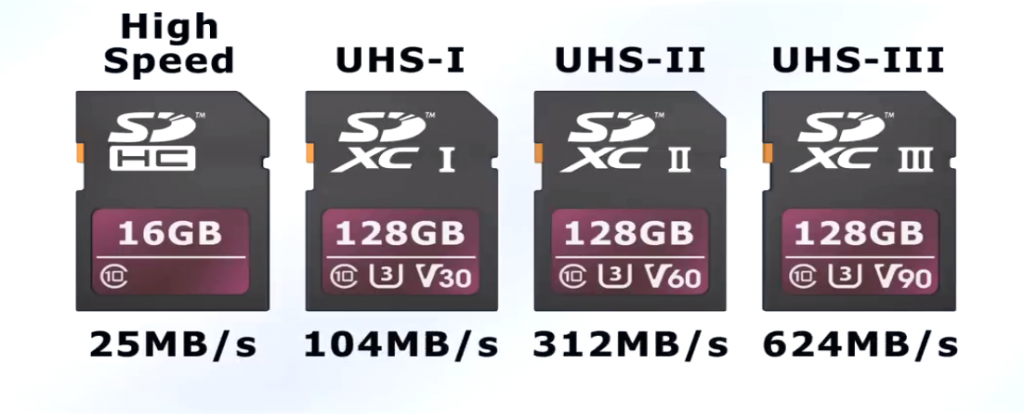
SD cards initially had limited storage capacities, often measured in megabytes (MB). However, as flash memory technology advanced, the capacity of SD cards grew significantly. SDHC (Secure Digital High Capacity) cards were introduced to support capacities up to 32 gigabytes (GB), and later, SDXC (Secure Digital eXtended Capacity) cards were introduced to support even larger capacities, ranging from 64 GB to 2 terabytes (TB) and beyond.
Speed Classes:
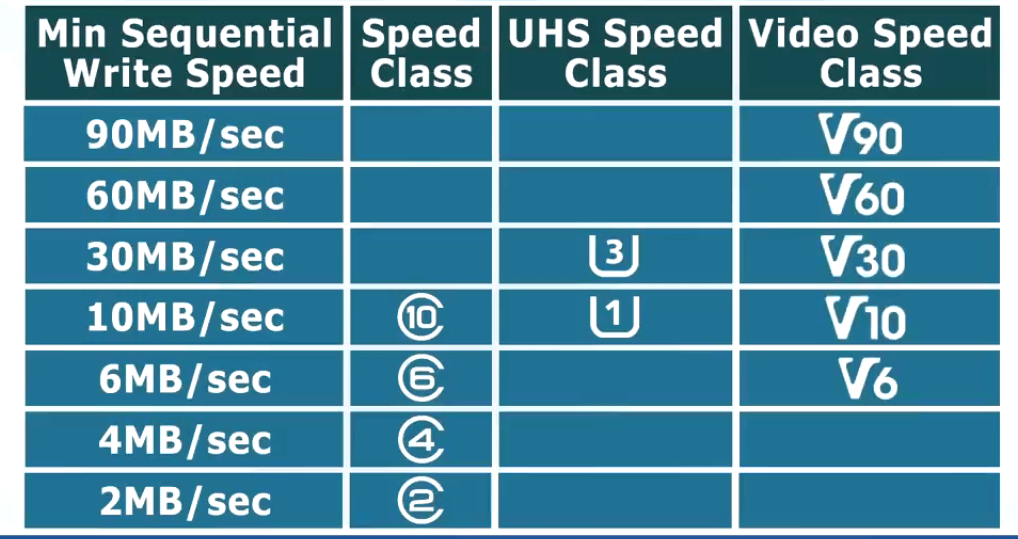
To accommodate the increasing demand for faster data transfer rates, SD cards are classified into different speed classes. These classes are denoted by symbols like “C2,” “U1,” “U3,” and so on, indicating the minimum sustained write speed for each card.
Security Features:
The “Secure” in Secure Digital refers to the various security features that have been added to SD cards over the years. Some SD cards have a write-protect switch, and others offer hardware-based encryption to protect data.
Application-Specific Variants:
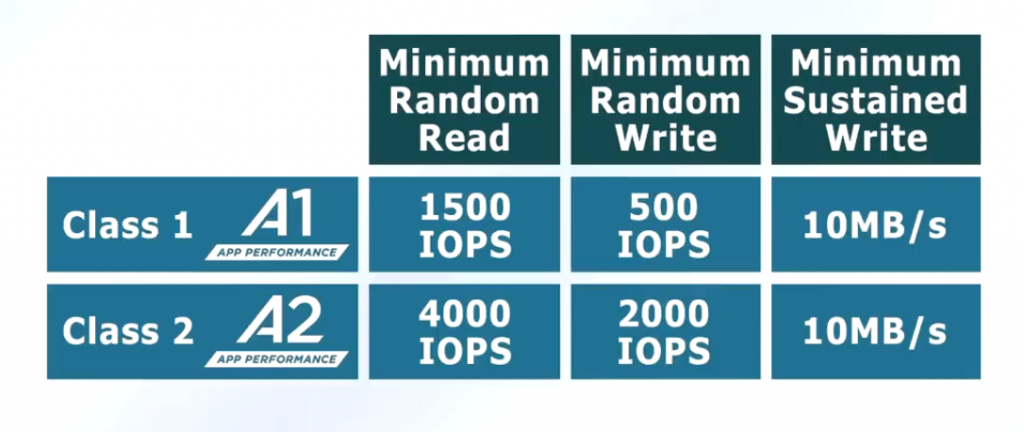
Over time, specialized variants of SD cards were developed for specific applications. For example, microSD cards are commonly used in smartphones, while SD cards designed for high-performance video recording are labeled as Video Speed Class (VSC) or Application Performance Class (A1 or A2).
Backward Compatibility:
One of the strengths of the SD card format is its backward compatibility. Most devices that accept larger SD cards can also use smaller ones with the appropriate adapter.
Market Dominance:
SD cards have become the dominant form of removable storage for consumer electronics. They are used in digital cameras, camcorders, drones, gaming consoles, and many other devices.
SD Express:
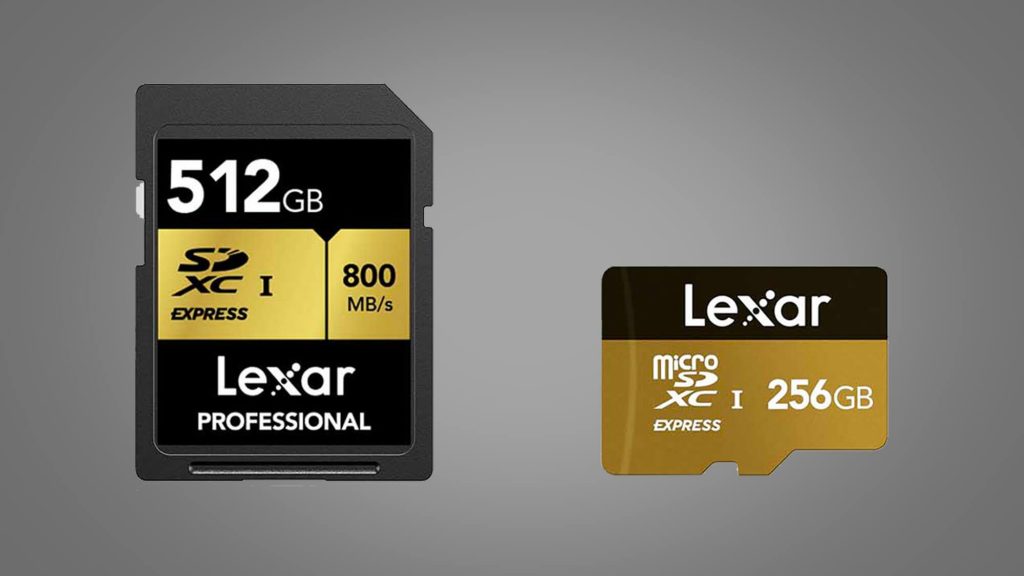
Introduced in 2018, SD Express is a new iteration of the SD card standard that utilizes the PCIe (Peripheral Component Interconnect Express) and NVMe (Non-Volatile Memory Express) interfaces to deliver much higher data transfer speeds. This makes SD Express suitable for applications like 8K video recording and high-speed data storage.
The SD card standard has continued to evolve and adapt to the changing needs of the electronics industry. Its ubiquity and versatility have made it a crucial component in the world of digital storage.
Understanding The Memory Card Basic
Before we dive into the technical details, let’s establish a basic understanding of what a memory card is. At its core, a memory card is a compact, portable storage device that uses electronic memory to store digital data. It is designed to be inserted into compatible devices to provide additional storage capacity.
There are several types of memory cards available in the market, including Secure Digital (SD) cards, microSD cards, CompactFlash cards, and more. Each type has its unique specifications and use cases, but they all operate on similar principles.
Key Components of Memory Card
- Flash Memory: The heart of a memory card is its flash memory chip. Flash memory is a type of non-volatile storage that retains data even when power is removed. It is organized into cells, which are further divided into pages and blocks. Each cell stores a binary value (0 or 1), representing the data.
- Controller: Memory cards also contain a controller, which acts as the brain of the card. The controller manages data read and write operations, wear leveling, error correction, and other essential functions. It ensures that data is stored and retrieved efficiently and reliably.
Types of Memory Cards
How Memory Card Store Data?
- Data Writing: When you save data to a memory card, it goes through a multi-step process. First, the controller selects an empty block of flash memory to write the data. Then, it programs the individual memory cells with the binary values that represent your data. This process involves changing the electrical charge in each cell to set it to the desired state.
- Data Reading: When you access data from a memory card, the controller reads the binary values stored in the memory cells. It converts these values into the digital data you can use on your device. Error correction algorithms are applied to ensure data integrity and accuracy.
Challenges and Solutions
Memory cards face several challenges, including limited write cycles (the number of times data can be written to a cell before it becomes unreliable) and the potential for data corruption. To address these challenges, memory card manufacturers implement wear leveling algorithms to distribute write and erase cycles evenly across the flash memory cells. Error correction codes are also used to detect and correct errors in stored data.
Conclusion
Memory cards are incredible pieces of technology that enable us to store and transport vast amounts of digital data conveniently. Understanding their inner workings can help us appreciate the engineering marvel behind these small, unassuming devices. As technology continues to advance, memory cards will likely evolve to offer even greater storage capacity, speed, and reliability. Whether you’re capturing precious moments with your camera or expanding the storage of your smartphone, memory cards will continue to play a vital role in our digital lives.